Crypto regulation: my costly lesson from a blocked token sale
I lost $4,200 in potential allocation because my VPN pinged from the wrong exit node. That's the number that should make any retail participant sit up.
Cameron Walton, Tokenomics Veteran & Launchpad Critic·Updated: July 08, 2026·11 min read
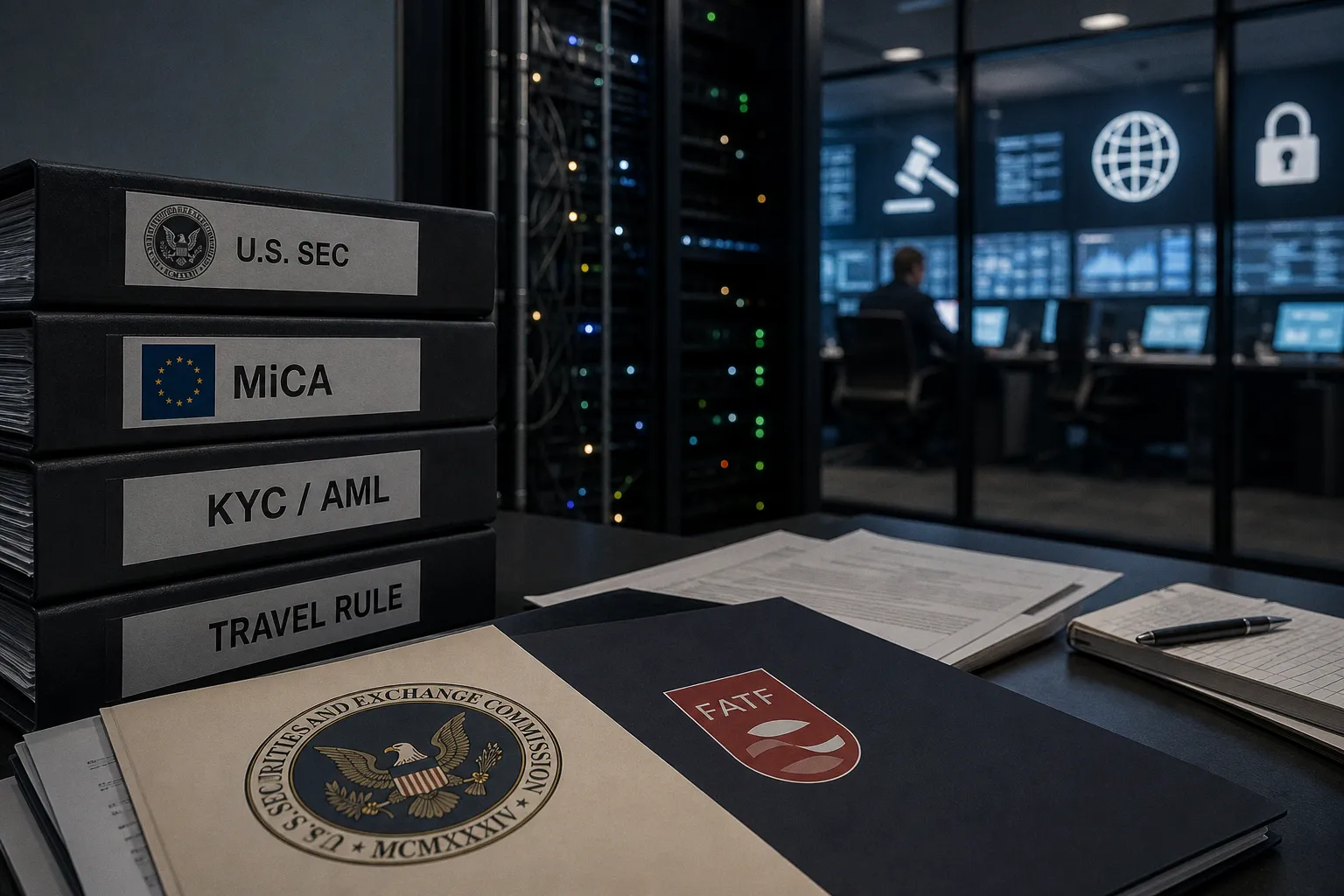
That single blocked transaction taught me more about the actual mechanics of token sales than any whitepaper I've read in seven years of doing this. The legal frameworks aren't theoretical. They're operational. They decide which wallets get whitelisted, which jurisdictions get hard-banned, and what happens to your funds when the music stops. If you're allocating capital into early-stage token launches in 2025, you need to understand the machinery — not the marketing copy.
The Anatomy of a Blocked Sale: Why Jurisdictional Restrictions Matter
Every serious launchpad now runs a geo-fencing stack that's more aggressive than most sovereign border controls. USA, China, Iran, North Korea — these aren't suggestions, they're hard exclusions. I've watched whitelist snapshots drop and seen entire regions erased from the room without warning. The reason isn't ideology. It's fear.
When a launchpad lists a token without proper jurisdictional compliance, the liability flows upward. The platform becomes a co-issuer in the eyes of regulators. That's why you'll see phrases like "not available to residents of..." plastered across every KYC gate. They're not protecting you. They're protecting the issuer's ability to actually launch the token without getting an enforcement letter six months later.
The math here is brutal. If 40% of your intended raise comes from US wallets, and you didn't register the offering under Reg D or Reg S, the SEC doesn't care that you called it a "utility token." They'll treat it as an unregistered securities sale. And the remedy isn't a slap on the wrist — it's disgorgement, fines, and forced refunds to investors. I have seen three IDOs in 2024 alone get retroactively delisted from major exchanges for exactly this reason. The token didn't fail because the product was bad. It failed because the legal wrapper was non-existent.
The label on the token is irrelevant. The economic reality of the sale is what regulators prosecute.
Beyond the Label: How the Howey Test Redefines Utility Tokens
Here's where most retail participants get fleeced. They read "utility token" in the project's GitBook and assume they're in a regulatory safe zone. They're not. The SEC doesn't grade on vocabulary. It applies the Howey Test — a four-prong analysis that's been federal law since 1946, derived from SEC v. W.J. Howey Co. and still the operational standard nearly eight decades later.
The test is simple in structure, devastating in application. Did buyers invest money? Is there a common enterprise? Is there an expectation of profit? Are those profits derived from the managerial efforts of others? If you answer yes to all four, congratulations — you just bought a security, regardless of whether the team used the word "utility" 47 times in their documentation.
I ran the test on a launch I reviewed last quarter. A "decentralized compute network" raised $8.4 million from a public IDO. The token gave holders governance rights over a treasury that funded infrastructure expansion. The team explicitly marketed yield projections to early backers. By prong three alone, that token was a security. The fact that the network actually delivered compute services afterward is legally irrelevant. The SEC evaluates the offering, not the product.
This is why I never look at a token's stated function when I'm evaluating regulatory risk. I look at how the sale was structured, what promises were made to buyers, and where the profit expectation originates. If the founders are still in the cap table and the token is being sold to fund their roadmap, the Howey Test is almost certainly satisfied. Period.
The FATF Travel Rule and the Reality of Mandatory KYC/AML
The second gate most retail investors don't think about is the Financial Action Task Force's Travel Rule. Since 2019, the FATF has applied its Virtual Asset Service Provider guidance to crypto, which means any platform facilitating token transfers above a certain threshold must collect, verify, and transmit identifying information for both sender and receiver.
This isn't optional. It's why every legitimate launchpad now runs a KYC stack that would make a Swiss bank jealous. Government-issued ID, proof of address, sometimes source-of-funds documentation for allocations above $10,000. I've been through it. It takes three to seven business days. It's intrusive. It's also non-negotiable if you want to participate in a regulated offering.
The platforms that skip KYC are either operating in legal gray zones or are outright exit scams. There is no third option. When a launchpad advertises "no KYC, global access" in 2025, you're looking at one of two things: a project that will never list on Tier 1 exchanges, or a project that's already on a regulator's radar. Neither is a good bet.
I keep a running list of launchpads that have folded under enforcement pressure. The pattern is identical every time. KYC skipped during the IDO. Rapid listing on offshore exchanges. Then a freeze notice from a major venue, followed by a cascading delisting cycle that destroys liquidity. The token doesn't go to zero because the product failed. It goes to zero because the legal foundation was hollow.
No KYC means no Tier 1 listing. No Tier 1 listing means no institutional liquidity. No institutional liquidity means you're exit liquidity.
Navigating the MiCA Era: New Standards for Token Issuers and Investors
The EU's Markets in Crypto-Assets regulation went fully effective on December 30, 2024. I've read the full text. It's 1,084 pages of legal framework, and it changes the calculus for anyone running a token sale in Europe or accepting European capital.
MiCA establishes three categories: asset-referenced tokens, e-money tokens, and "other" crypto-assets. The third category is where most IDO tokens land, and it requires issuers to publish a white paper, register with a competent authority, and comply with marketing communication rules that explicitly ban misleading claims about profitability or risk-free returns.
What does this mean for you as a retail participant? If a project is targeting European liquidity, it's now subject to disclosure requirements that are materially more rigorous than anything we've seen in the US. That's good for transparency. It's terrible for the kind of "10x in 30 days" pitch decks that used to flood my inbox.
More importantly, MiCA has created a fragmentation effect. EU-based launchpads now require geo-fencing that excludes US participants by default. I've watched three major IDOs in Q1 2025 implement "EU-only" rounds that completely bypassed the traditional US-Asia split. The capital is still flowing, but the corridors are narrower. If you're sitting in a restricted jurisdiction, your allocation is being structurally compressed whether you like it or not.
For issuers, the cost of compliance has gone up. White paper preparation, legal opinion procurement, and registration fees now routinely exceed $150,000 before a single token is sold. That's a barrier to entry that filters out the worst actors — but it also means the projects that survive MiCA compliance tend to be more institutionalized, which often translates to less aggressive tokenomics and smaller retail upside.
The Hidden Risks of Non-Compliance: From Asset Freezes to Delisting
The most expensive lesson from my own portfolio came not from picking a bad project, but from picking a project that picked a bad jurisdiction. I allocated into a "decentralized social" token through an IDO in late 2023. The platform had KYC, the team had legal counsel, everything looked clean. Then the US-based founders made the mistake of actively soliciting US investors in a public Discord — which triggered SEC scrutiny under the Howey framework.
The token didn't get immediately delisted. It got something worse: a slow bleed. First, a major US exchange issued a "review" notice — the polite precursor to a delisting. Then the token's only meaningful liquidity pool evaporated when market makers pulled quotes to avoid enforcement risk. By the time the team announced a "voluntary restructuring" four months later, the token was down 94% from IDO price and I was staring at an illiquid position I couldn't exit above five cents on the dollar.
That's the hidden cost of jurisdictional non-compliance. It's not a single catastrophic event. It's a death by a thousand cuts — exchange delistings, market maker withdrawals, banking partner terminations, and finally, the founder group moving on to the next project while the original investors hold the bag. I've tracked seven similar collapses in the past 18 months. The pattern is remarkably consistent.
The same dynamic plays out for individual wallets, just at a smaller scale. Miss the KYC window, get tagged by the wrong compliance filter, or try to route around a jurisdictional block with a residential proxy, and you'll find your allocation reverted, your stablecoins frozen for review, or your account permanently banned from the platform. These aren't hypotheticals. These are the support tickets I read in launchpad Discords every single week. The retail participants who treat compliance as optional are the same ones writing angry posts six months later wondering where their capital went.
The Verifiable Edge: How to Compliance-Screen Before You Commit
I now run every potential IDO through a pre-flight checklist before I even look at the tokenomics. This is the discipline that has saved me from repeating the same expensive mistake. It starts with three questions: Who is the issuer, where is the issuer domiciled, and which jurisdictions were explicitly excluded from the whitelist snapshot?
If the project is incorporated in a recognized regulatory hub — Switzerland, Singapore, the EU post-MiCA — and the exclusion list is transparent and reasonable, that's a baseline green flag. If the project is incorporated in a jurisdiction with no crypto framework, has no legal opinion in its documentation, and runs a "global, no restrictions" sale, I walk. Immediately. The upside isn't worth the enforcement tail risk.
I also watch the accredited investor thresholds. In the US, the $1M net worth or $200k/$300k annual income test gates participation in many private rounds. Retail investors are functionally excluded from the best deals by design. That's not a bug — it's the regulatory framework working as intended. The projects that try to circumvent these thresholds end up in the same SEC enforcement docket as everyone else.
The final layer is understanding that compliance is a feature, not a tax. Platforms that have invested in legitimate regulatory infrastructure are easier to trust, easier to exit through, and less likely to be retroactively classified as fraud. If you're diversifying into passive income strategies across staking and lending, working with a platform that prioritizes compliance protects your principal in ways that "anonymous, no-KYC" alternatives simply cannot. The same principle applies to the launchpads you choose. Compliance is the moat, and most retail participants still haven't figured that out.
Final Word: The New Reality of Token Sale Participation
I don't romanticize crypto regulation anymore. I've been through the blocked wallets, the frozen allocations, the delisting cascades. What I do is respect the machinery. The US, the EU, and the FATF have built a compliance perimeter that any serious token sale has to operate within. The projects that work with that perimeter tend to survive. The projects that try to route around it tend to disappear.
If you're allocating capital into IDOs in 2025, treat the regulatory framework as part of your due diligence — not an afterthought. Read the jurisdiction exclusions. Verify the legal opinion. Run the Howey Test yourself. And if a project makes compliance look optional, assume the project is optional too. The market will not give you a second chance to recover from a non-compliant launch. The delisting notices go out, the liquidity evaporates, and the founder group moves on. You're left holding the regulatory exposure.
This is the actual game. Not "when Lambo." Not "WAGMI." Just cold math, hard regulation, and the discipline to walk away from deals that aren't legally clean. The upside is still real — I have positions in MiCA-compliant launches that have performed well precisely because the regulatory foundation gave them institutional credibility. But the upside comes with a compliance filter, and ignoring that filter is the fastest way to turn a speculative allocation into a total loss.