Crypto KYC: Lessons from my failed IDO verification
I burned 14 minutes on a launchpad's verification flow last Tuesday. Passport scan, liveness blink, proof of residence, wallet signature, two-factor confirmation.
Cameron Walton, Tokenomics Veteran & Launchpad Critic·Updated: July 07, 2026·11 min read
This isn't a complaint piece. I've reviewed enough tokenomics to know that IDO compliance filters aren't there to protect you. They're there to protect the launchpad from regulators. Every red light is a legal liability shifted off the platform and onto your rejected application. If you've been locked out of an allocation recently, the rejection wasn't personal. It was structural. Let me walk you through what actually happens when a crypto KYC pipeline rejects you, and why the rules hitting your wallet in 2025 are stricter than what most launchpads marketed to you twelve months ago.
The anatomy of a failed IDO verification
Here's the exact sequence I ran through, and the one every regulated launchpad is running you through right now — whether they advertise it or not.
1. Identity document capture. Passport, national ID, or driver's license. OCR extracts the MRZ (machine-readable zone), checks holograms, and flags expired documents on the spot. Most providers (Sumsub, Onfido, Veriff, Persona) cross-reference the document against a government database where one exists.
2. Liveness detection. A short selfie video or 3D face map. This isn't security theater — it's how the provider proves the document belongs to a living person physically present at submission. Deepfake detection runs in parallel.
3. Proof of residence. Utility bill, bank statement, or government correspondence dated within the last 90 days. Address must match the ID. This is where casual applicants get wrecked — old utility bills die instantly.
4. PEP and sanctions screening. Your name gets run against Politically Exposed Persons lists, OFAC's SDN list, the UN consolidated list, and the EU sanctions database. This happens whether the launchpad mentions it or not.
5. Wallet attestation. You sign a message from the wallet you intend to fund the IDO with. The signature binds your verified identity to a specific address. Several platforms now push that address through Chainalysis or TRM Labs for prior exposure to mixers, darknet markets, or sanctioned counterparties.
6. Jurisdiction gate. Your IP, document-issuing country, and declared residence get cross-referenced against the launchpad's restricted-jurisdiction list. US, China, Iran, North Korea, and a rotating cast of others get hard-blocked.
Six steps. Each one a potential rejection point. The jurisdiction gate is the one that caught me, and it's the one that has nothing to do with who you are and everything to do with where your documents were issued.
A KYC rejection isn't the system failing. It's the system working exactly as the launchpad's legal team specified.
The Howey Test and the geography problem
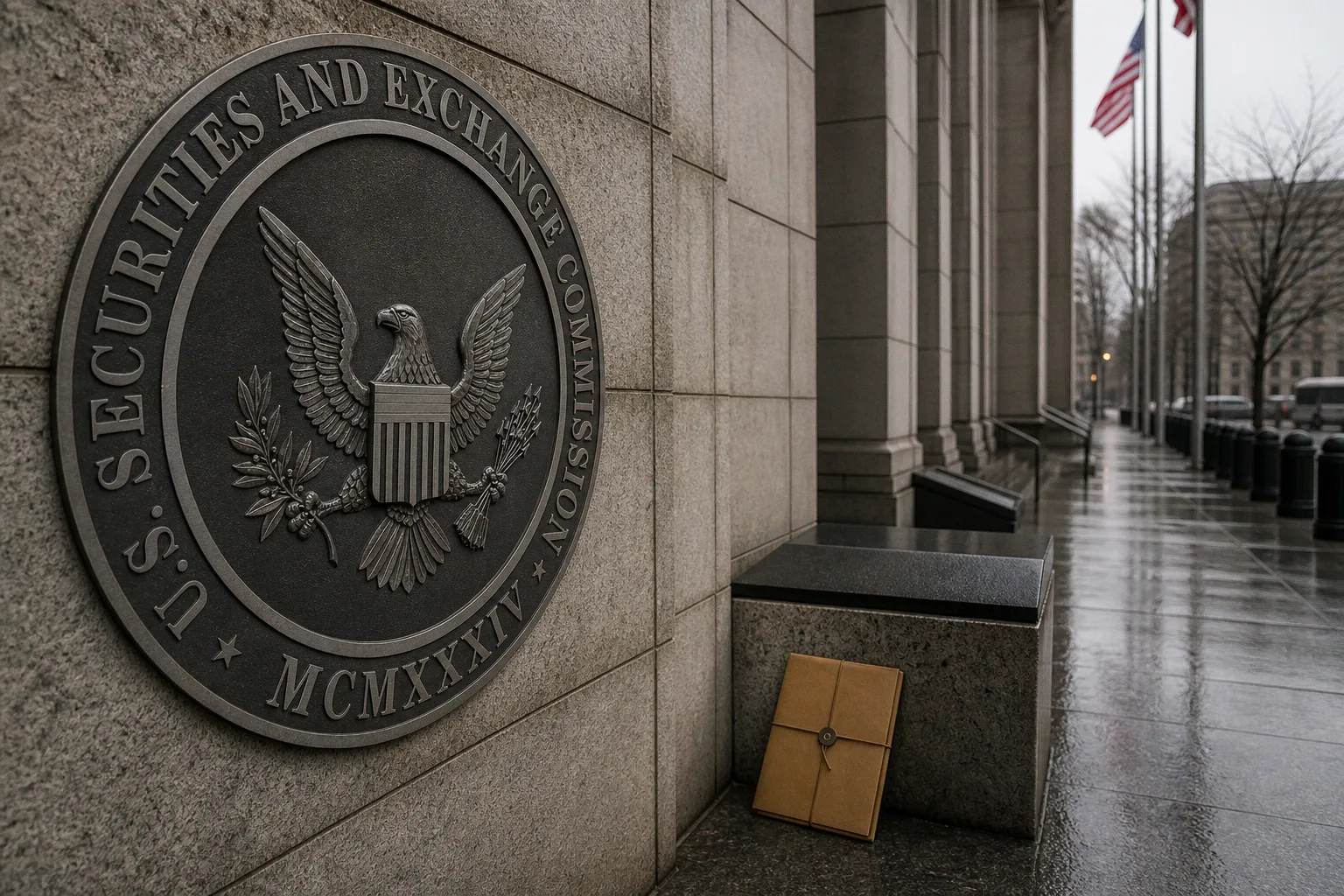
The SEC doesn't care if a token is "utility." It cares if your token sale meets four criteria, established in SEC v. W.J. Howey Co. back in 1946 and still in force today. An investment contract exists when there is (1) an investment of money, (2) in a common enterprise, (3) with a reasonable expectation of profits, (4) derived from the efforts of others. If your IDO ticks those four boxes — and most do, despite the "utility" label — the SEC treats it as an unregistered securities offering.
That's why KYC matters. It's not gatekeeping for gatekeeping's sake. KYC is the launchpad's evidence that it attempted to verify accredited investor status, screen for sanctions exposure, and exclude jurisdictions where local regulators have already declared token sales illegal. When a launchpad skips KYC, it's not "decentralized" — it's exposed. When it runs KYC and still gets sued, the audit trail becomes the defense.
Here's what the geographic exclusion list typically looks like for a regulated IDO in 2025:
| Jurisdiction | Reason for exclusion | Common workaround |
|---|---|---|
| United States | SEC securities law; Howey Test exposure | Accredited-only pools (rare) |
| China | 2021 ban on crypto transactions | None legal |
| Iran / North Korea / Syria | OFAC sanctions | None — criminal liability |
| UK | FCA financial promotions regime | None for retail |
| Canada (Ontario) | OSC restrictions | Provincial carve-outs |
I fall into the US column. My passport is American. Even though I was connecting from a server in Lisbon, the document-issuing country triggered the block. The IP geolocation didn't override the document match. That detail alone breaks most "use a VPN" advice floating around on Crypto Twitter — your documents rat you out regardless of where your packets terminate.
If you're shopping for jurisdictions with clearer rules, Dubai's emergence as a regional crypto hub is the case study everyone cites — VARA licensing, tax clarity, and a sandbox for tokenized offerings. The contrast with India isolating banks from crypto access on the same continent tells you everything about how fragmented this regulatory map really is. Geography is alpha in token sales, and most participants don't even know they're playing on a non-square board.
The FATF Travel Rule and the $1,000 threshold
Here's the number most launchpads don't put on their landing page: $1,000. That's the FATF Travel Rule threshold — the figure above which Virtual Asset Service Providers must collect, store, and transmit originator and beneficiary information for every transfer. FATF updated its guidance to include virtual assets in 2019, and the threshold has stuck across most implementations, though exact figures vary by jurisdiction.
For IDOs, this matters in two places. First, the funding transaction from your wallet to the launchpad's contribution address. If you're allocating more than $1,000 worth of stablecoins or ETH, the launchpad's custodial layer is now legally obligated to capture your identity — which is exactly why KYC exists before you ever click "contribute." Second, any post-launch claim or refund flow that exceeds the threshold gets the same treatment. You're not just buying a token. You're generating a regulated financial event every time you cross that line.
This is also why non-custodial IDO models — the ones marketing themselves as "no KYC, just sign a message" — are walking a regulatory tightrope without a net. The moment a launchpad takes custody of pooled funds, even briefly, it becomes a VASP. The moment it becomes a VASP, the Travel Rule applies. There's no clever smart contract architecture that escapes this. The compliance layer follows custody, not branding. Whitepaper rhetoric dies in a courtroom.
Beyond the selfie: AML screening and PEP checks
The selfie is the part you see. The PEP and sanctions screening is the part that actually determines whether you pass. Every regulated launchpad runs applicants against three database categories:
- OFAC's Specially Designated Nationals (SDN) list — US Treasury's master sanctions registry, updated constantly
- UN and EU consolidated sanctions lists — overlapping but not identical to OFAC, with their own jurisdictional reach
- PEP databases — politically exposed persons, including their close associates and family members, who require enhanced due diligence under FATF Recommendation 12
A flag doesn't mean automatic rejection. It triggers enhanced due diligence (EDD). The launchpad has to document why it's onboarding someone who appeared on a watchlist. Most don't bother. The risk-adjusted cost of approving one flagged user is higher than the revenue from their allocation. You get rejected. No appeal. No human review. The algorithm says no, and the launchpad's compliance officer isn't going to overrule it for a $500 IDO slot.
Wallet screening adds another layer. Chainalysis, TRM Labs, and Elliptic sell services that map wallet addresses to risk categories by clustering on-chain behavior. If your funding wallet has ever touched a mixer, a known scam contract, or a sanctioned address — even months before you knew about the IDO — you'll get flagged. The providers don't care about intent. They care about exposure. One hop from a flagged address is enough to trigger manual review, and manual review means a 5–14 day delay you can't afford when the whitelist closes in 48 hours.
The compliance gate isn't checking who you are. It's checking who you've ever been adjacent to, financially.
What actually gets you rejected
After talking to compliance folks at three launchpads off the record, the failure modes cluster into a predictable list:
- Document freshness. A utility bill dated 91 days ago. A bank statement missing the issuer's full address. A selfie with the document held at an angle the OCR can't read.
- Wallet contamination. Indirect exposure to a sanctioned address through a bridge, a swap, or even a CEX withdrawal that batched your funds with someone else's tainted coins.
- Name mismatch. Your passport says "Mohammed" but your bank statement says "Mohamed." String similarity scores below 85% trigger manual review.
- Address mismatch. Your passport was issued in New York but your proof of residence is from Florida. Some providers accept, most don't.
The launchpad isn't hiding this from you. They just don't bother explaining it because explaining it would expose how thin the margin between "approved" and "funds returned" actually is.
The future of privacy: zero-knowledge proofs in token launches
This is where the cynical veteran in me wants to pour cold water on the hype. Zero-knowledge proofs for KYC are technically real. Projects like Polygon ID, Rarimo, and a handful of others are building systems where you can prove "I am over 18," "I am not on a sanctions list," or "I am not a US person" without uploading your passport to a centralized provider. The math works. The cryptography is sound. I've read the audit reports.
What isn't sound — yet — is regulatory acceptance. No major regulator has blessed zk-KYC as a substitute for traditional AML. The FATF's most recent guidance explicitly flags decentralized identity solutions as not satisfying Travel Rule obligations, because the originator and beneficiary data still needs to be transferable to law enforcement on request. A zk-proof you can't unwrap under subpoena doesn't satisfy the rule, no matter how elegant the circuit.
There's also a practical problem the marketing decks skip: revocation. If your zk-proof is issued by a DAO and you end up on a sanctions list six months later, how does the launchpad know to block you on your next contribution? Centralized KYC providers handle this with a live API call. Decentralized systems need a revocation registry, and any revocation registry re-introduces the centralization point the architecture was designed to avoid. The trade-off hasn't been solved. It's been deferred.
So where does this leave retail? With a short list of practical moves that don't require a PhD in cryptography:
- Document freshness. Renew utility bills and bank statements before you start the KYC. A 91-day-old bill is a guaranteed rejection, and reshooting the flow costs you a slot.
- Wallet hygiene. Use a clean wallet for IDO contributions. Don't fund from an address that's touched mixers, cross-chain bridges of questionable origin, or DEXs with high-risk exposure.
- Jurisdiction honesty. If your documents say US, don't expect a VPN to save you. The document match overrides the IP, and the launchpad logs both.
- Read the restricted-jurisdiction list before the whitelist opens. Most launchpads publish it in their terms of service. Few retail participants scroll past the marketing hero section to find it.
The bottom line from someone who's been on the wrong side of the red screen
Crypto KYC is not your friend. It's not your enemy either. It's a legal liability firewall that the launchpad is required to maintain, and you're the raw material flowing through it. When it rejects you, that's the firewall working. When it approves you, that's not a stamp of legitimacy on the project — it's the launchpad covering its own exposure so its general counsel can sleep at night.
I lost my allocation. I didn't lose money, because the launchpad never took custody before the jurisdiction gate closed. That's the correct outcome. The system caught the regulatory mismatch before any funds changed hands. Most failed KYC stories end worse — funds locked, refunds delayed, support tickets ignored for weeks. Mine ended with a clean rejection email and a lesson I'm writing down so you don't have to learn it the same way.
If you're entering an IDO in 2025, treat the KYC flow the way you'd treat a tax audit. Prepare in advance. Use clean documents. Use clean wallets. Read the jurisdiction list. Assume the launchpad's compliance team has already decided who gets in before the form ever loads. The 14 minutes you spend on it should be preparation, not discovery.
And stop reading whitepapers for clues on whether the project is "legal." KYC doesn't make a token SEC-compliant. It makes the launchpad's audit trail defensible. Those are different things, and confusing them is how retail ends up funding the next unregistered securities offering with their life savings and a selfie.